
Who This Blog Is For: If you have started wondering whether the answer to “can screen time cause vertigo” explains why long days on a laptop or evenings scrolling in bed leave you dizzy, this blog is written for you. It speaks to people across Spring Lake Park, Blaine, Fridley, Mounds View, and Columbia Heights who work at screens, study on them, or simply spend long Minnesota winters indoors on them — and who want to understand the structural piece that eye exams and inner-ear workups often leave out.
You close the laptop after a full workday, look up, and the room seems to drift for a second before it settles. Or you finish scrolling before bed and lie down feeling like the mattress is gently swaying. When you keep feeling dizzy after time on screens, it is easy to assume you simply need to look away more often — and easy to feel worn down when cutting back helps only a little. Here is the more hopeful part: when screens reliably tip you into dizziness, it often points to how steadily your balance system is working underneath, not just to the hours on the clock.
Table of Contents
Key Insights
- Screens rarely start vertigo on their own; they are more often the spark that exposes how your balance system is coping underneath.
- The dizzy, swaying feeling after screen time often comes from a sensory mismatch — your eyes report motion while your inner ear and body report stillness.
- The alignment of your upper neck helps supply the steady position signals your brain uses to settle that mismatch, and may shape how easily screens tip you into dizziness.
- Upper cervical care works alongside the care of your physician and eye specialist — never in place of it.
Can Screen Time Cause Vertigo?
Quick Answer: Screen time rarely causes vertigo, but it can trigger or worsen dizziness through a sensory mismatch — your eyes sense motion while your inner ear and body sense stillness. Your physician evaluates medical causes like BPPV, vestibular migraine, or Meniere’s. A commonly overlooked contributor is the upper neck, whose alignment affects the steady signals your brain uses for balance.
Vertigo is a symptom, not a diagnosis, so what screens do depends on what is happening underneath. Your physician looks first at the recognized causes: benign paroxysmal positional vertigo (BPPV), inner-ear conditions such as Meniere’s or labyrinthitis, vestibular migraine, and cervicogenic dizziness that stems from the neck.
Long stretches of screen time — a fast-scrolling feed, a motion-heavy movie, or hours at a desk — are the spark that can set off dizziness, not the underlying reason it happens. Researchers call this cybersickness: your eyes signal that the scene is moving while your inner ear and body insist you are still, a contradiction that can leave you lightheaded or feeling like the room is drifting.
The most overlooked contributor sits at the top of the neck. When those upper vertebrae rest slightly out of alignment, the position signals your brain relies on grow less consistent — so the mismatch a screen creates may be harder to settle.
How Screen Posture Keeps the Cycle Going
Your body is built to adapt. When the upper neck holds a small misalignment, the rest of your structure compensates to keep your head level — a subtle head tilt, extra muscle tension, a posture shift you never chose.
Hours at a screen add to that load. Leaning toward a monitor or dropping your head to a phone pulls it forward of the shoulders, and the muscles at the base of the skull work harder to hold it there. Over time, that strain keeps the upper neck under pressure — and because your balance system depends on clear input from this region, the screens that demand so much focus may make the mismatch harder to settle.
Why Screen-Related Vertigo Can Linger
Left unaddressed, compensation patterns tend to reinforce themselves. One area tightens, the nearby structures pick up the slack, and posture settles in. For some people, this is why screen-related vertigo in Spring Lake Park seems to shadow them for months, long after they cut back on screens and took breaks.
None of this is a reason to stop what is already helping. Eye exams, screen breaks, blue-light glasses, vestibular therapy, and medical management all have their place. The point is simply that when dizziness keeps returning after screen time, the structural piece — neck alignment and screen-related dizziness — is worth evaluating too, since it rarely shows up on a standard eye exam or inner-ear workup.
How Upper Cervical Care in Spring Lake Park Help Patients with Screen-Related Vertigo
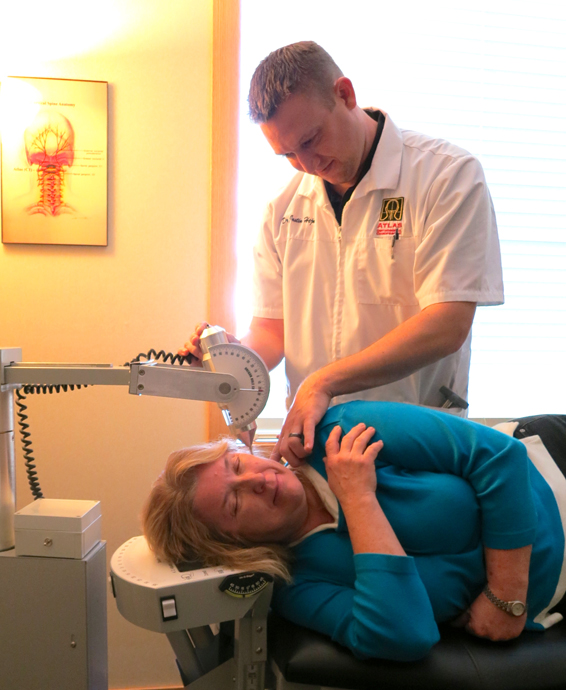
Upper cervical care focuses narrowly on the alignment of the top of the neck and how it relates to your posture. At Hejny Chiropractic, care follows the Atlas Orthogonal method — an imaging-guided approach that maps your individual anatomy before any gentle, low-force correction, with no twisting, popping, or cracking.
The aim is not to chase the dizziness itself but to support the structure so your balance system has steadier input when a screen sends its mixed signals. Many people find that upper cervical care for vertigo in Spring Lake Park fits naturally alongside the eye care and medical care they already rely on, adding to it rather than replacing any part of it.
Reclaim Your Screens Without the Spin
If your workday or evening scroll now comes with a side of dizziness, the most hopeful step is to stop accepting it and look at what may be feeding the pattern. Upper cervical care in Spring Lake Park gives your body the chance to work from a steadier foundation, and addressing an upper-neck misalignment sooner may keep those compensation patterns from contributing to other issues down the road. At Hejny Chiropractic in Spring Lake Park, Dr. Justin Hejny offers a gentle evaluation to see whether your alignment is part of the story.
→ Contact Hejny Chiropractic in Spring Lake Park, MN to schedule your consultation.

Frequently Asked Questions on Upper Cervical Care for Vertigo Relief in Spring Lake Park
Can too much screen time really trigger vertigo?
It can act as a trigger. For many people, long or fast-moving screen sessions set off dizziness through a sensory mismatch rather than causing vertigo outright. If screens reliably tip you into it, both the medical and structural pieces are worth having evaluated.
Is screen dizziness the same thing as cybersickness?
They overlap. Cybersickness is the screen version of motion sickness — nausea, dizziness, and eye strain that show up without any real movement. When it leaves you feeling like the room is spinning or drifting, that dizziness is often what people describe as screen-related vertigo.
Why do I feel dizzy after scrolling on my phone but not always at my desk?
Fast-moving content and small, close screens tend to create the strongest sensory conflict, while a steady desk setup at eye level usually creates less. Posture matters too — looking down at a phone loads the upper neck differently than a monitor at eye level.
How would I know if my screen-related dizziness is connected to my neck?
Clues can include a past head or neck injury, lingering neck tension or stiffness, headaches that travel from the base of the skull, or dizziness that persists after your vision and inner ear have been checked. None of these confirms a neck link on its own, but together they are worth noticing. A focused upper cervical evaluation is the clearest way to find out whether the structural piece is part of your pattern.
Do blue-light glasses and screen breaks actually help?
They can, and there is no reason to stop using them if they bring relief. Breaks, eye-level screens, and reduced glare ease the visual load that sparks an episode. They simply address the spark; if dizziness keeps returning, the structural contributor underneath may still be worth a look.
How long might it take to notice a difference?
It varies from person to person, depending on how long the pattern has been present and what else is involved. Some people notice changes over a few weeks, while others take longer. Your care plan is tailored to what your evaluation shows.
Is upper cervical care safe if screens leave me dizzy?
The Atlas Orthogonal approach uses gentle, low-force, imaging-guided corrections rather than forceful twisting or cracking. As with any care, an evaluation comes first to determine whether you are a good candidate before anything is done.
To schedule a complimentary consultation with Dr. Hejny, call our Spring Lake Park office at 763-230-0116. You can also click the button below.
 If you are outside of the local area, you can find an Upper Cervical Doctor near you at www.uppercervicalawareness.com.
About the Author