
Who the Blog is For: If you keep asking why do migraines keep coming back, you have likely done everything asked of you — tracked the triggers, kept the sleep schedule, taken the medication exactly as prescribed — and still the episodes return, weeks of relief unraveling into another one. If that cycle is wearing you down across Spring Lake Park and the nearby northeast-metro communities, there may be a piece of the pattern no workup has looked at yet.
Before we get there, the part that is harder to name: the quiet bracing when your head first twinges, the plans you hold loosely, the way a good day never feels fully safe because you cannot tell how long it will hold. That kind of uncertainty is draining in a way that is hard to explain to someone who has not felt it. More often than not, a cycle that keeps returning points to a driver that has not been fully addressed — sometimes one a standard migraine workup does not examine.
Table of Contents
Key Insights
- If your migraines keep returning after good stretches, it often means an underlying driver has not been fully addressed.
- Everyday triggers — stress, skipped meals, poor sleep, screen glare, weather shifts — are the spark for an episode, not the deeper reason the pattern persists.
- The nerves of the upper neck share pathways with those that carry head and face pain, so alignment here can shape how readily migraines return.
- Upper cervical care works alongside your physician’s migraine care — never in place of it.
Why Do Migraines Keep Coming Back?
Quick Answer: Migraines often keep coming back because the condition is neurological and multifactorial — your physician evaluates and manages the medical side, from genetics and hormones to specific triggers. Everyday triggers set off a given episode, but a commonly overlooked contributor to the pattern is the upper neck, where alignment can influence the shared nerve pathways involved in head pain.
Most people hoping to know why their migraines keep coming back want one clean answer. But migraine is a neurological condition, not a single event, so what keeps it returning depends on what is driving it. Your physician looks first at the factors medicine knows well: genetic tendency, hormonal shifts, sleep and stress patterns, and individual triggers.
Those everyday triggers — a stressful week, a skipped meal, a poor night’s sleep, bright screens, a swing in the weather — are the spark that sets off an episode, not the underlying reason the pattern repeats. That is why avoiding triggers can quiet the frequency yet leave the cycle intact.
A contributor that often goes unexamined sits at the top of the neck. When the upper vertebrae are out of alignment, that region can stay under a low, steady load — one more input feeding a nervous system already primed to react.
When to Seek Immediate Care: Some headaches need urgent medical attention rather than a structural evaluation. Seek emergency care for a sudden, severe “worst-ever” headache; a headache with fever, a stiff neck, confusion, fainting, or a rash; one with vision loss, weakness, numbness, or trouble speaking; a headache after a head injury; or a new or clearly changed pattern, especially after age 50. When in doubt, contact your physician or emergency services first.
The Upper-Neck Connection Behind Recurring Migraines
The reason the neck matters comes down to wiring. The nerves serving the upper neck share pathways with those that carry pain from the head and face, so tension or irritation at the top of the neck can be felt as head pain rather than neck pain. When head pain traces back to the neck this way, clinicians term it cervicogenic headache, which can overlap with or amplify an existing migraine pattern.
This is also why neck tension and migraines so often travel together. When the upper cervical spine holds a small misalignment, the muscles at the base of the skull work harder, and that strain keeps feeding the same sensitive pathways. It rarely creates a migraine from nothing, but it can lower the threshold at which the next one starts.
Why Progress Rarely Moves in a Straight Line
Migraine improvement rarely follows a straight line, and that catches people off guard. Because so many factors feed the pattern — sleep, stress, hormones, triggers, and structural load among them — progress tends to come in steps and plateaus rather than a steady decline. A run of good weeks can give way to a flare after a hard stretch or a short night, and it can feel like starting over.
It usually is not. A setback inside a longer pattern of fewer, milder episodes is not the same as no change — it is often what gradual progress looks like with a condition this layered. Addressing a structural contributor like upper-neck alignment is one piece of that arc, working alongside the other factors rather than overriding them.
How Upper Cervical Care Fits Alongside Your Migraine Care
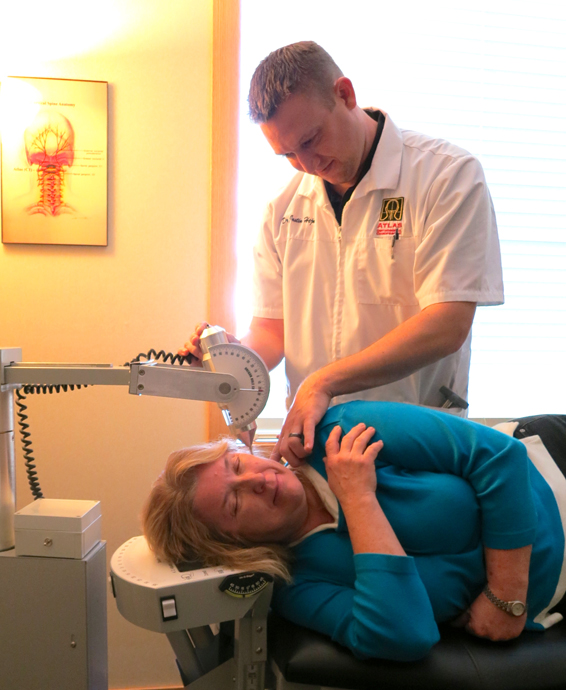
Upper cervical care looks at one question: is the atlas — the top vertebra your skull rests on — holding its position, or adding load to an already sensitive system? At Hejny Chiropractic, Dr. Hejny uses the gentle, imaging-guided Atlas Orthogonal method: imaging to map your alignment, then a light, precise correction with no twisting or popping.
The goal is not to override your migraine care but to ease one structural input that may be keeping the pattern sensitive. For many people, upper cervical care for migraines in Spring Lake Park fits alongside the medical care, medications, and trigger management they already rely on — adding to the plan, never replacing any part of it.
Find Out Whether Your Neck Is Part of the Pattern
If your migraines keep returning no matter how carefully you manage them, the next step is not to chase each episode but to look at what might be keeping the whole pattern sensitive. At Hejny Chiropractic in Spring Lake Park, Dr. Justin Hejny offers a gentle evaluation to see whether upper-neck alignment is one of the pieces worth addressing.
→ Contact Hejny Chiropractic in Spring Lake Park, MN to schedule your consultation.
Frequently Asked Questions
Can a misaligned neck really contribute to migraines?
It can be one contributor. The nerves of the upper neck share pathways with those that carry head and face pain, so when the top vertebrae are out of alignment, that region can add steady input to an already sensitive system. It does not replace the medical factors your physician manages — it sits alongside them as a piece worth checking.
What is the difference between a migraine and a cervicogenic headache?
A migraine is a neurological condition, often with throbbing pain, nausea, and sensitivity to light or sound. A cervicogenic headache starts from the neck and is felt in the head, usually tied to neck movement or posture. The two can overlap, and a clinician can help sort out how much each is contributing to your pattern.
Will I still need my migraine medication?
That is a decision for you and your prescribing physician — upper cervical care is not a substitute for it. The aim is to address a structural contributor that medication is not designed to reach, so the two can work alongside each other. Never change your prescriptions without your doctor’s guidance.
Why do my migraines come back even when I avoid my triggers?
Avoiding triggers can lower how often episodes fire, but triggers are the spark, not the underlying reason the pattern persists. If something is keeping your system primed — including an unaddressed structural contributor like upper-neck alignment — episodes can keep returning despite careful trigger management.
Is it safe to have my neck adjusted if I get migraines?
The method used at Hejny Chiropractic relies on gentle, imaging-guided corrections rather than forceful twisting of the neck. As with any care, an evaluation comes first to confirm you are a good candidate and to flag anything that needs medical attention instead.
Could my migraines be coming from my posture or screen time?
Posture and long hours on screens can add to the load on your upper neck, which may feed the pattern, though they are rarely the whole story. They tend to act as contributors and triggers rather than the source of a migraine condition. An evaluation can help show how much your posture is part of your particular picture.
How is Atlas Orthogonal different from regular chiropractic for migraines?
General chiropractic often works the whole spine with manual adjustments. Atlas Orthogonal focuses on the alignment of the topmost vertebra and uses imaging to guide a light, instrument-delivered correction — no twisting or cracking. For a pattern that may involve the upper neck, that precision is the point.
When should a migraine send me to a doctor instead?
Right away if a headache is sudden and severe, feels like the worst of your life, or comes with fever, a stiff neck, confusion, vision changes, weakness, or trouble speaking — or if it follows a head injury. A new or clearly changed pattern, especially after 50, also deserves prompt medical review. Upper cervical care is for the ongoing structural piece, not for these warning signs.
To schedule a complimentary consultation with Dr. Hejny, call our Spring Lake Park office at 763-230-0116. You can also click the button below.
 If you are outside of the local area, you can find an Upper Cervical Doctor near you at www.uppercervicalawareness.com.
About the Author